
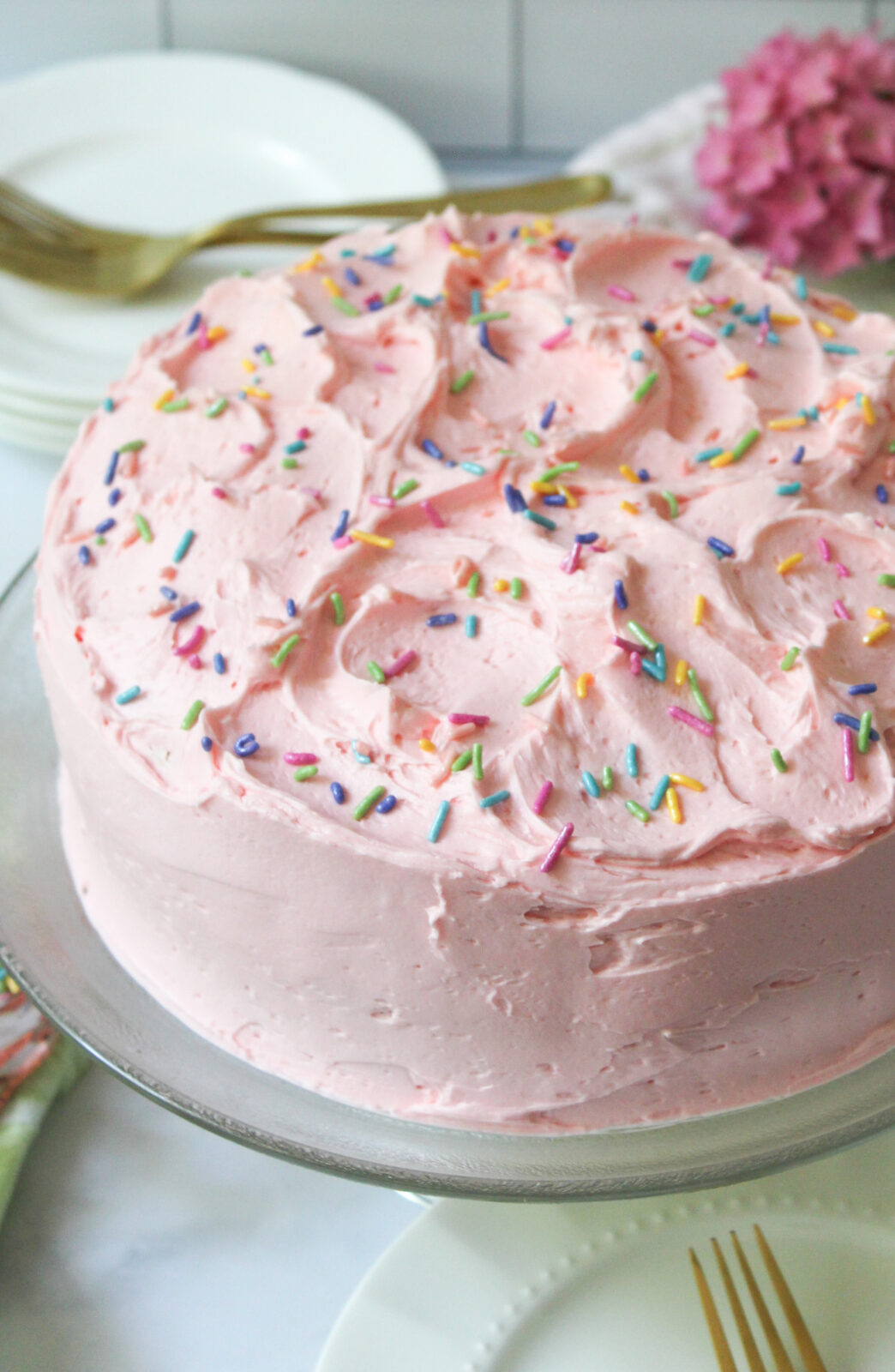
Half the Sugar of my Traditional Sweet American Buttercream!
This Less Sweet American Buttercream Frosting is silky, satiny, fluffy, smooth, spreads easily and pipes like a dream!
In the world of buttercream frostings American buttercream is typically very sweet, sometimes gritty and doesn’t always spread easily – tearing up crumbs on your cake. I grew up with this type of buttercream (see my Easy Buttercream Frosting recipe) and it does hold a nostalgic place in my heart.

Recently, however, I learned about an emulsified style of Less Sweet American Buttercream Frosting – that I am completely over-the-moon about!
It’s closer in texture to the more complicated European style buttercreams that can involve whipping egg whites and cooked sugar syrups. It’s easy to make with a stand mixer and uses a whole lot less sugar. The texture is achieved through emulsification of the creamed butter (fat based) and sugar mixture with the heavy cream (water based.)
I tested many version of this type of emulsified buttercream and learned a great deal about the technique. (see 2 of the many articles here and here.) My version is not quite as buttery tasting as some and not quite as whipped cream tasting as others – falls somewhere in the middle.
This style of frosting has a closer ratio of butter to sugar. It won’t crust over as will American buttercream with a higher sugar ratio. Also, it will get firm in the refrigerator and is best left to come back to room temperature before serving.

Why Creaming is Important?
I have read that the word “cream” in “buttercream” refers to the process of creaming the butter and sugar until light and fluffy, alternatively, other sources state it refers to the “cream” (ingredient) in the frosting. Regardless of the origin of the word, both cream and creaming are essential to making Less Sweet American Buttercream Frosting.
Creaming or beating the butter and sugar together makes the butter light and fluffy and full of air pockets. Essentially preparing the mixture to successfully accept/emulsify with the heavy cream. You are forcing heavy cream with a high water content into butter with a high fat content.
Why is a Stand Mixer Helpful?
Sometimes when adding the cream during the emulsification process the mixture will break and resemble clumpy cottage cheese. (Don’t worry if you keep mixing it will recombine!) This could happen due to the butter not being creamed well or the cream being too cold, or the cream not being added in gradually.
This is where a stand mixer is the perfect tool for the job. It helps make the creaming process effortless. Your stand mixer does the mixing so your hands can be free to slowly drizzle in the heavy cream for the emulsification. Also it does the lengthy final whipping of the frosting – which takes 12-15 minutes when using a powerful stand mixer. (It would take much longer to mix by hand or even with a hand mixer.)
Specifically – I like using my flex edge beater with my KitchenAid Stand Mixer. It does a great job with the creaming and emulsifying.

Are All Powdered Sugars the Same?
Powdered Sugar = Confectioners’ Sugar = 10x Sugar
I didn’t realize powdered sugars could vary in their textural fineness. Powdered sugar is sometimes called 10x sugar – meaning that during processing it is to be “screened” 10x for fineness. However once when deviating from my usual Domino’s Powdered Sugar for a store brand, I ended up with disappointingly grainy frosting. Possibly not all brands screen to the standard 10x?
Various brands can also vary in the amount of corn starch anti-caking ingredient added. Corn starch is not very soluble at room temperature, so a higher percentage in the blend could add to graininess. I’ve recently learned that most organic brands of powdered sugar utilize tapioca starch rather than corn starch as the anti caking agent which can help lead to less gritty results as tapioca starch is more soluble at room temperature – so would get better dissolved by the heavy cream in the recipe.

How to Make: Less Sweet American Buttercream Frosting

How Much Frosting Does the Recipe Make?
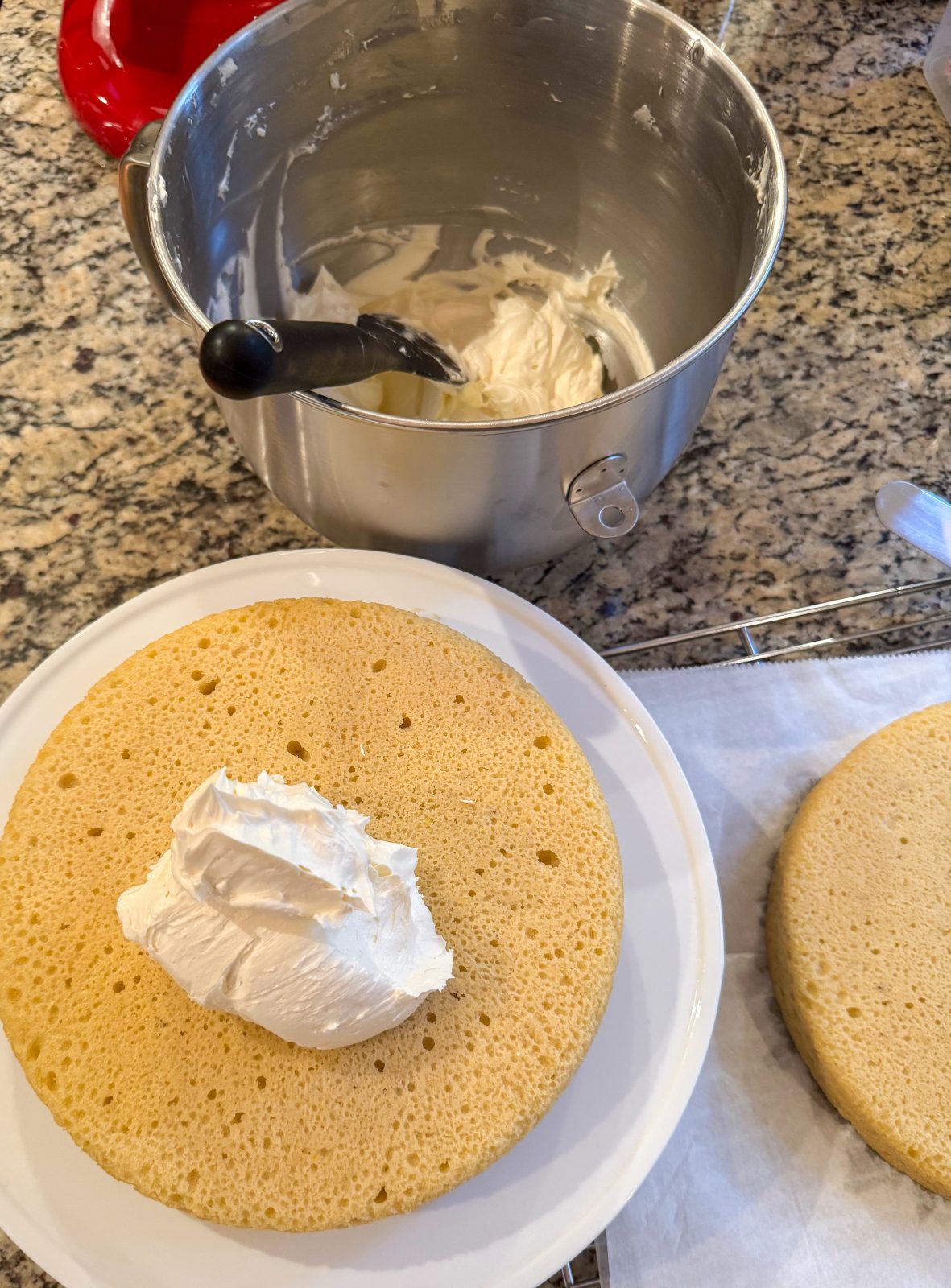
Less Sweet American Buttercream frosting makes approx. 3.5-4 cups. A single batch is enough to cover an 8 or 9-inch, 2-layer cake, 13 x 9-inch sheet cake or about 24 cupcakes. If you like to be generous with your frosting or would like extra for piping and decorating – you may want to make 1.5 batches. See notes section of recipe for variations of ingredient amounts.
Make Ahead, Storage and Hot Weather:
I tend to bake my cake the day before and make my frosting the day I’m serving. If you want to make ahead and decorate ahead – the butter in the frosting will solidify in the refrigerator. After storing your decorated cake in the refrigerator, It’s best to let it come to room temperature before serving.
For storing extra frosting, I generally freeze in an air tight container, thaw in the refrigerator and re-whip for several minutes before using.
As with most butter based American buttercream frostings, I would not keep this frosting out in very warm conditions. If you need a super stable frosting for hot weather, I would check out this one.
Other Frosting Recipes:
- Easy Buttercream Frosting – My Sweet American Buttercream
- Cream Cheese Frosting
- Lemon Cream Cheese Frosting
- Tina’s Chocolate Buttercream Frosting
Less Sweet American Buttercream Frosting
Equipment
- 1 stand mixer with flex edge or flat beater I use my KitchenAid 7qt Stand Mixer with Double Flex Edge Beater
Ingredients
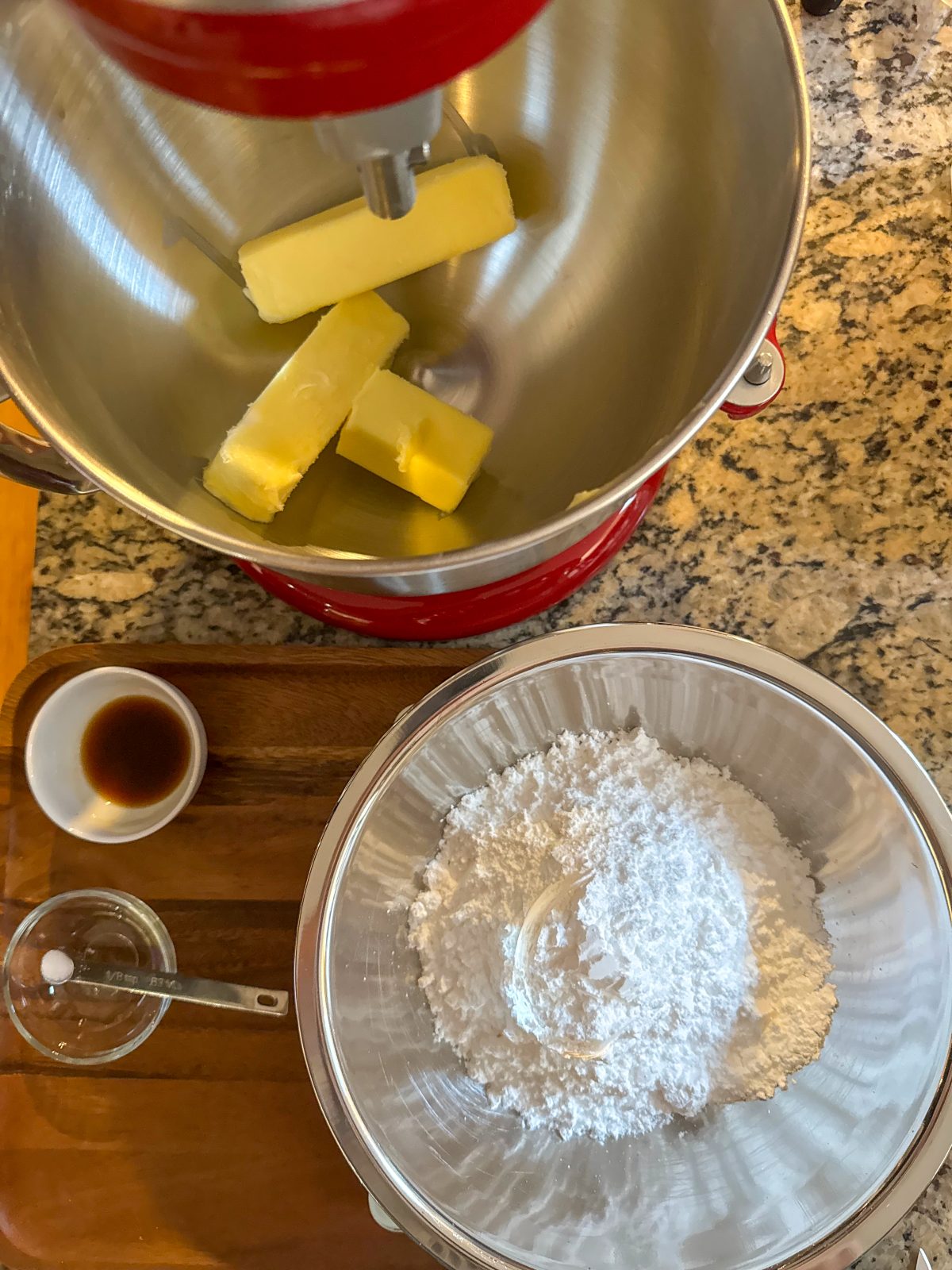
- 2 1/2 sticks (282 g) unsalted butter
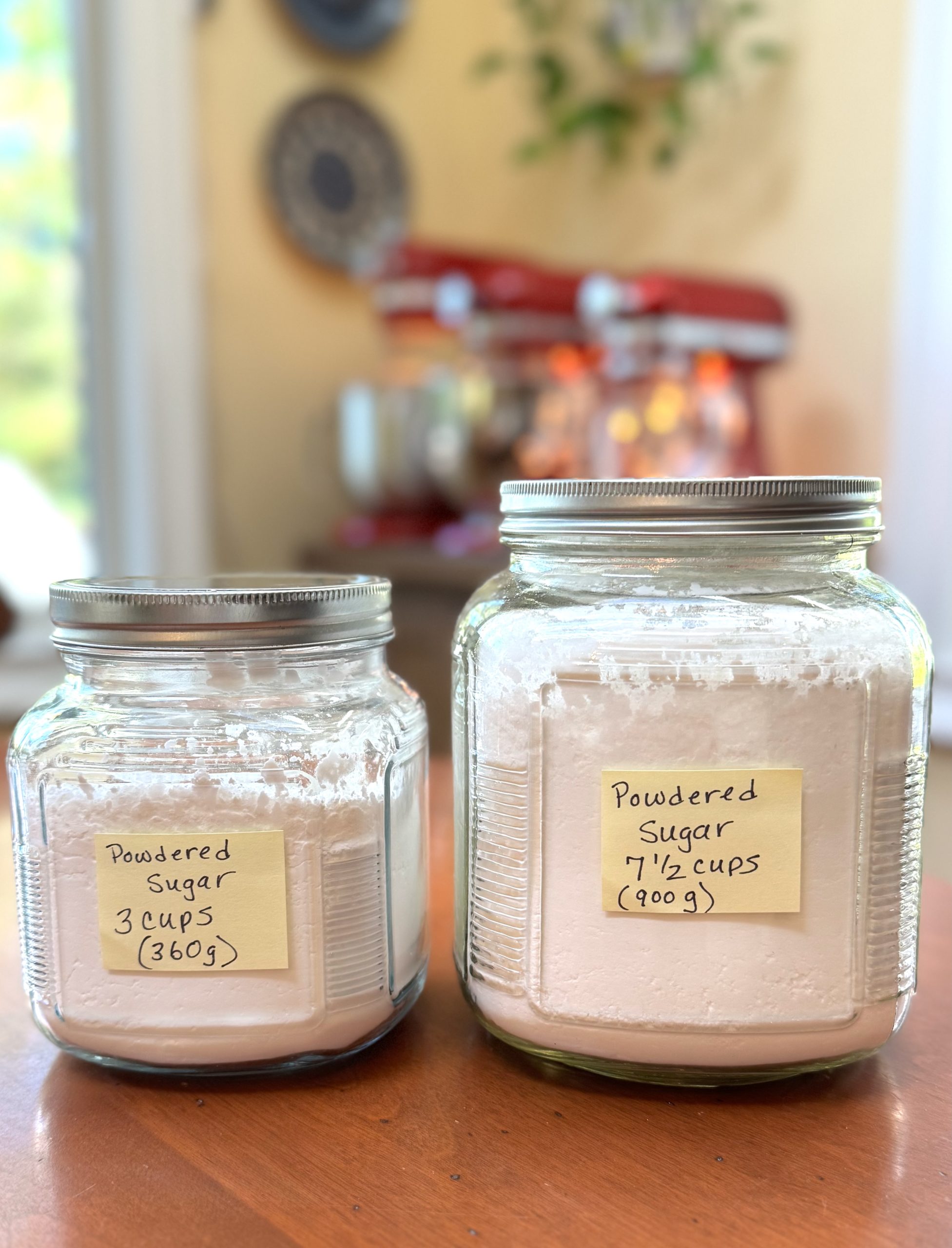
- 3 cups (320 g) powdered sugar*
- 2 teaspoons vanilla
- 1/2 cup (120 g) heavy cream room temp.
- 1/8 teaspoon fine grained salt
To Make .5 or 1.5 batch: See Notes
Instructions
- Take butter out of refrigerator, cut into tablespoon pieces and let sit at room temperature for 30 minutes. You want it to be a cool room temperature – about 65-67 degrees F. (So it holds the air when whipping.)
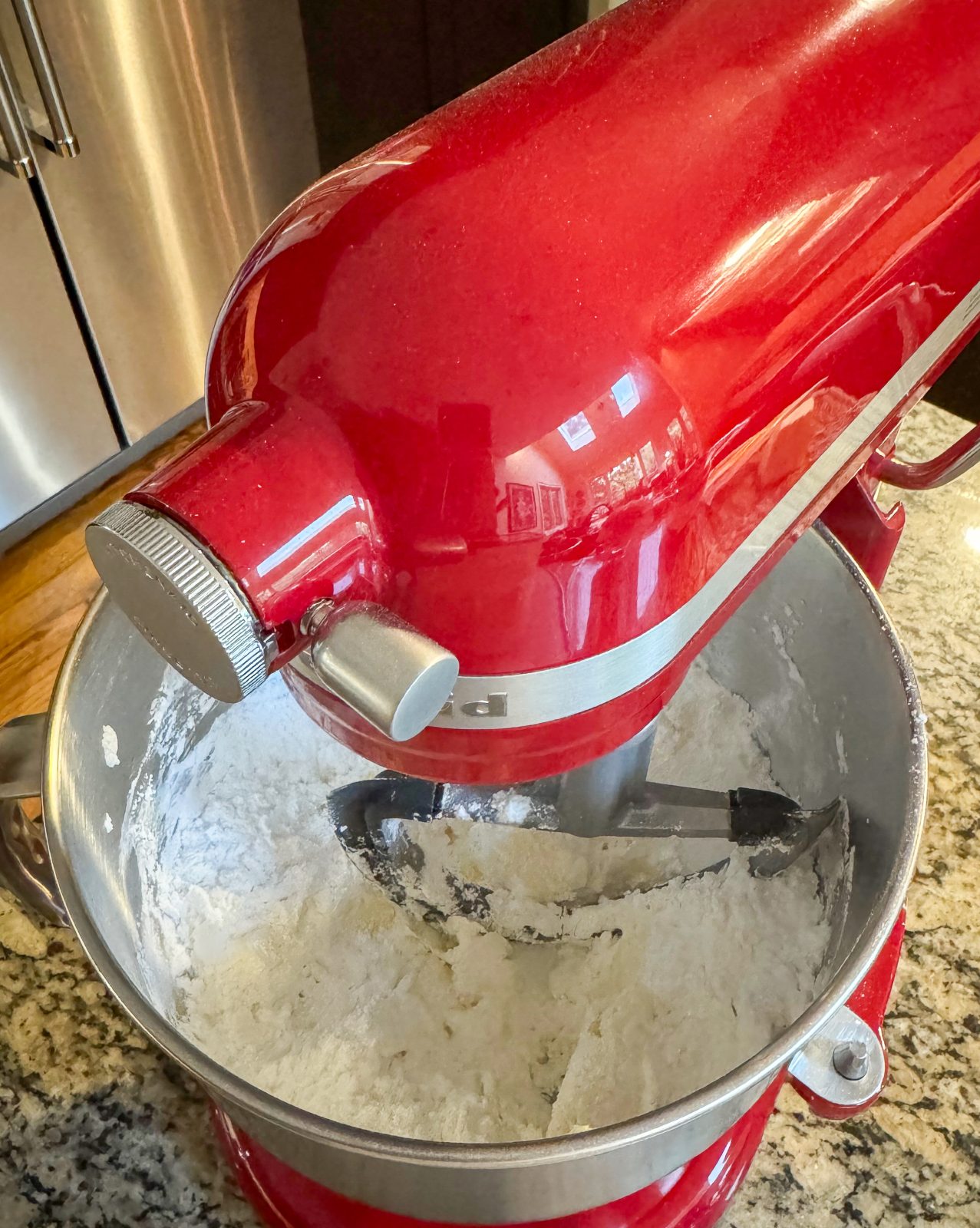
- Combine butter, sugar and salt in stand mixer bowl and beat for 3-4 minutes on speed 4/5. Scrape down bowl and mix for another 30 seconds.
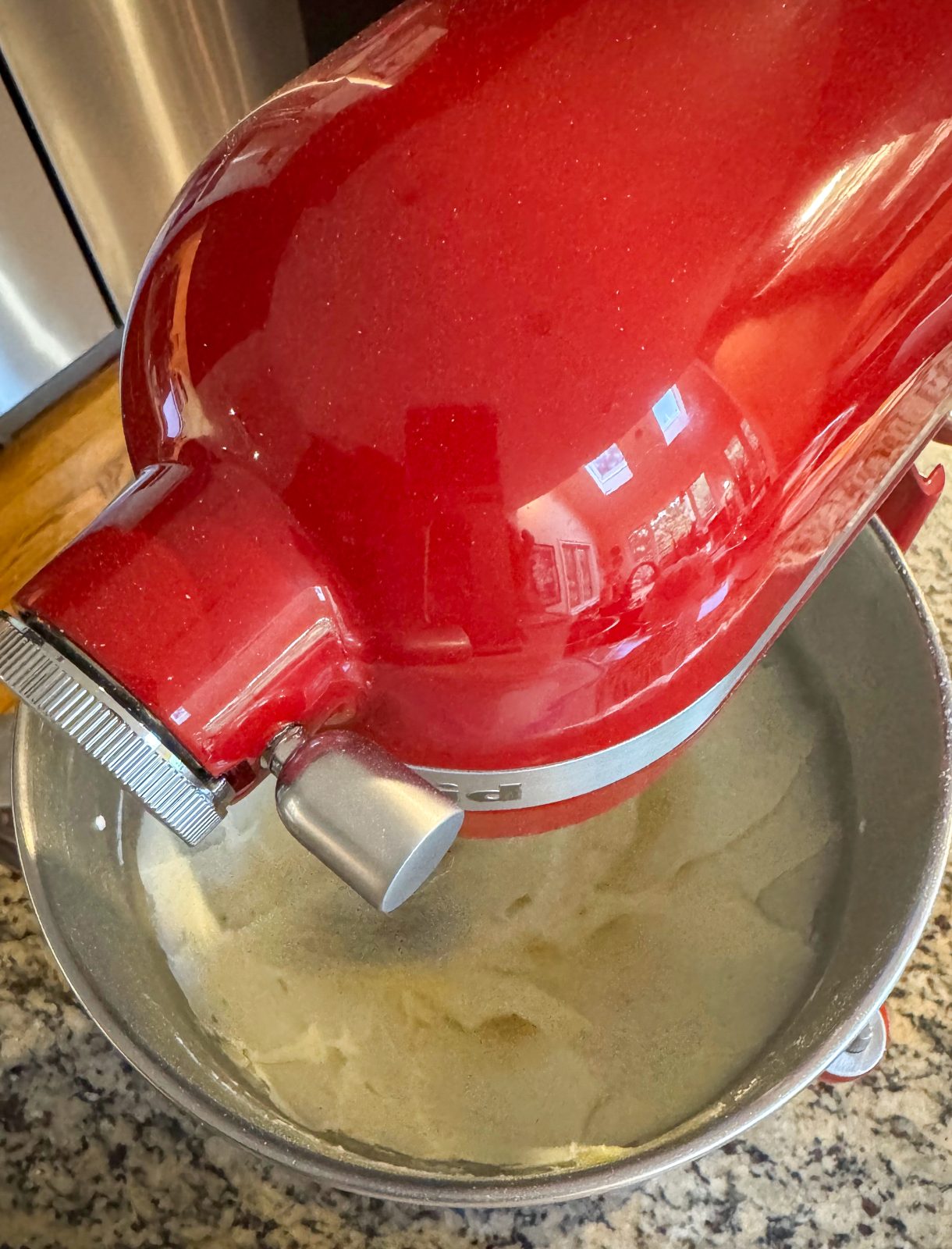
- Add vanilla to heavy cream. With mixer running on speed 1 or 2, slowly drizzle in heavy cream, vanilla mixture to emulsify the mixtures. (If the mixture breaks and looks curdled – just keep mixing.)
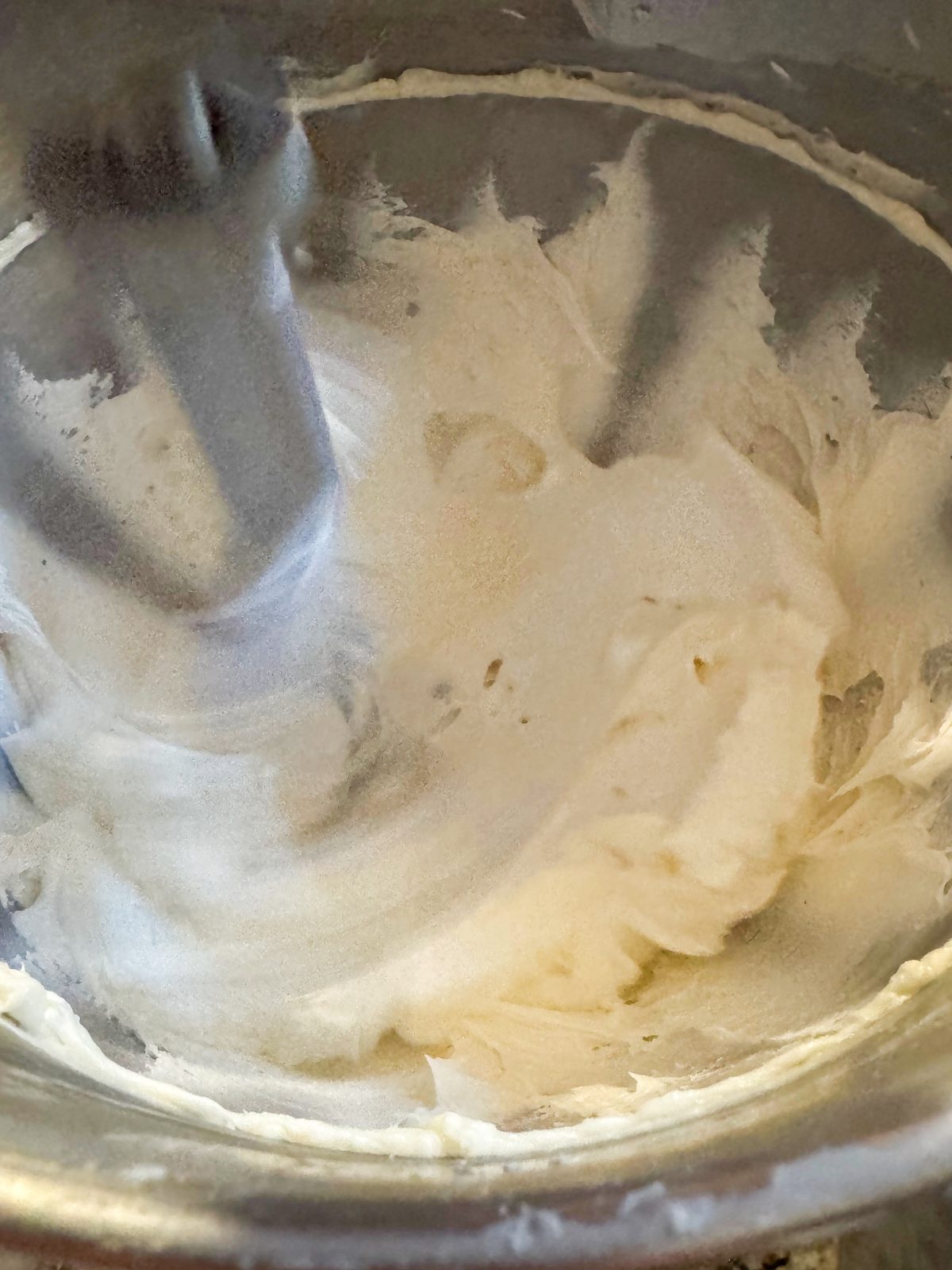
- Beat 12-15 minutes on speed 5-6, stopping to scrape beater and bowl occasionally. Stir speed at end or hand stir to get out large bubbles
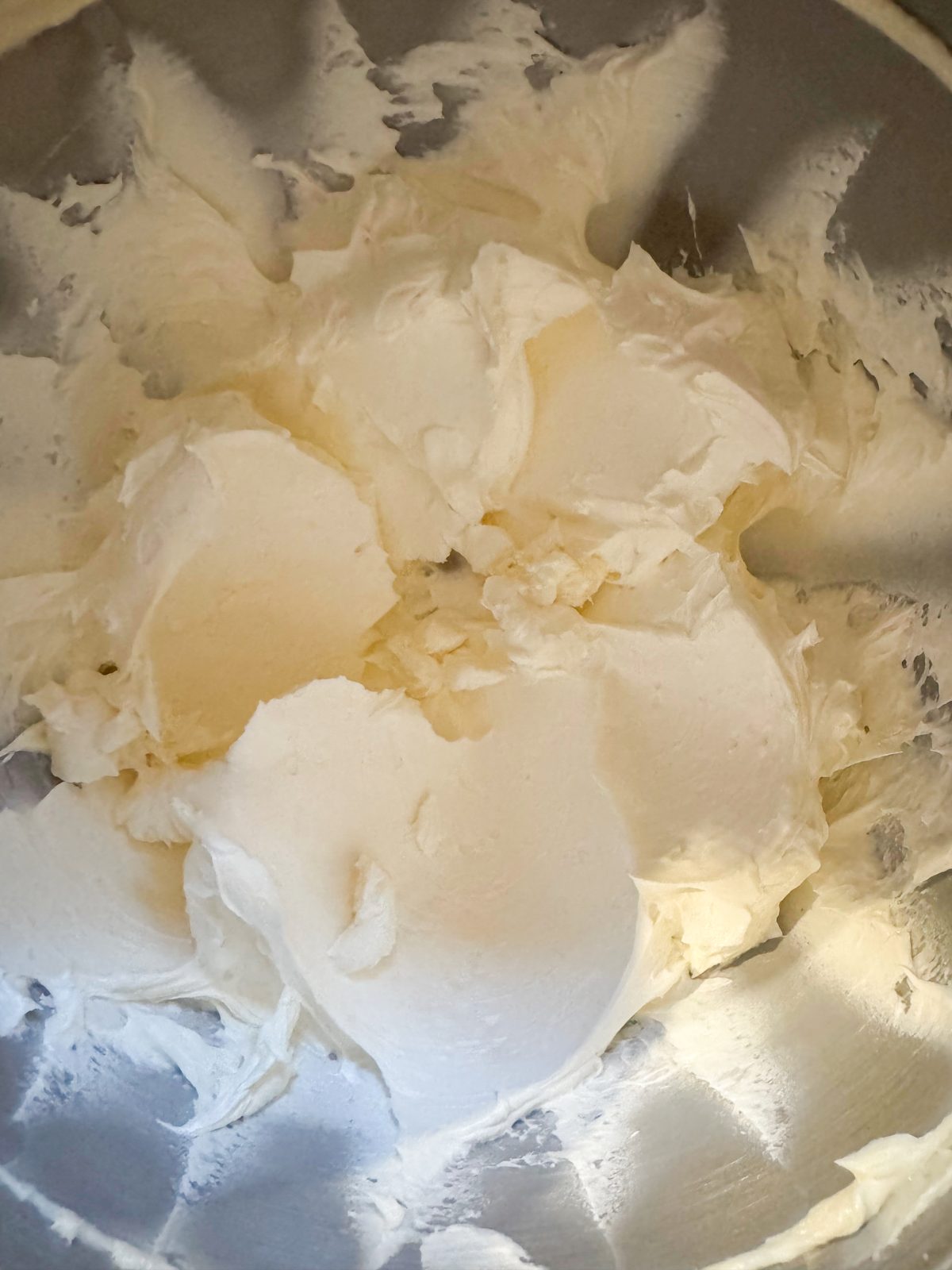
- You should see it getting very fluffy, thick, silky and more white in color.
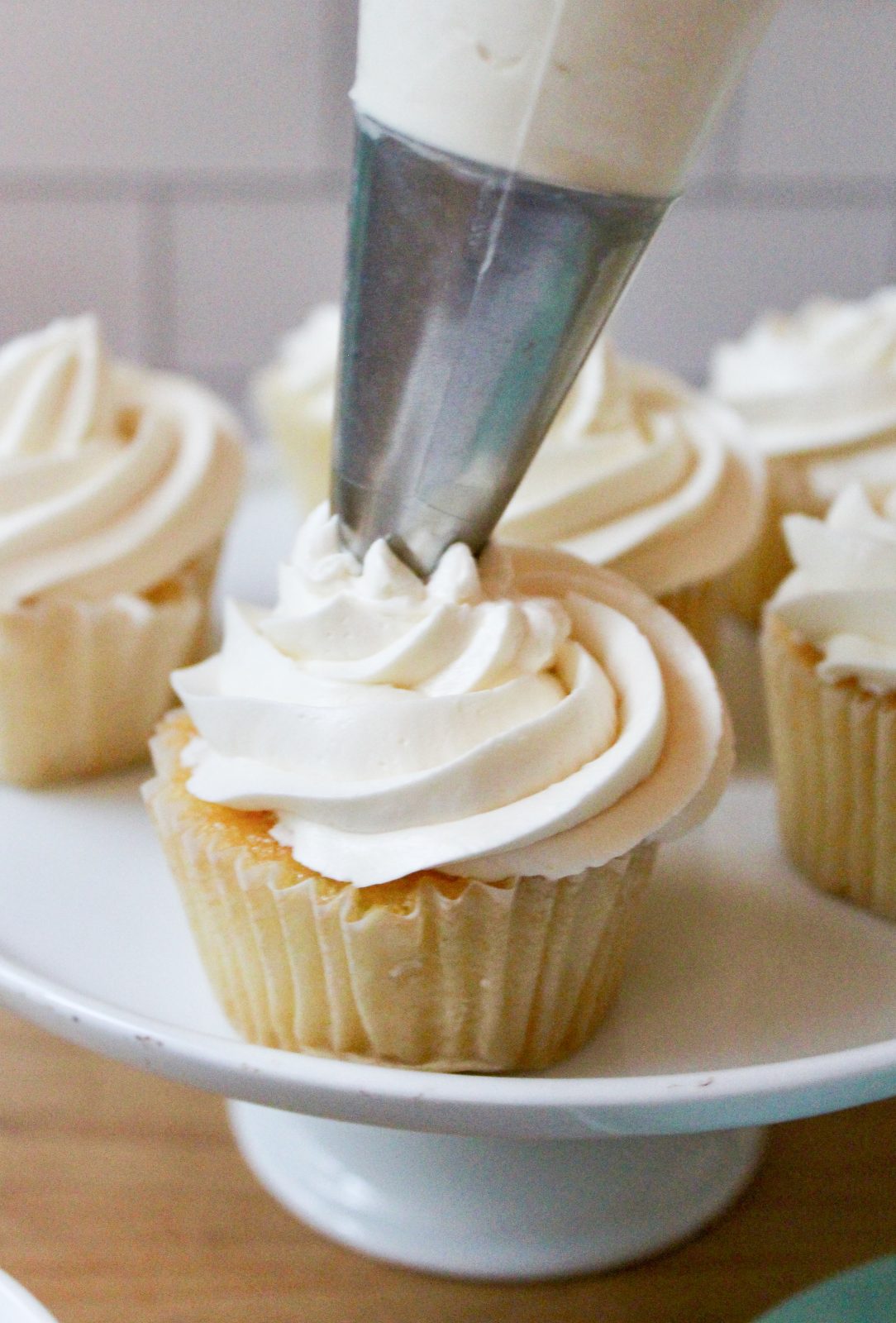
- Frost / pipe on your cake or cupcakes. If serving within 2 hours, I'll put in a cool place. For longer I refrigerate uncovered until it firms up and then cover. If refrigerated, allow to come to room temperature before serving.
Notes
Powdered Sugar aka Confectioners’ Sugar aka 10x Sugar.
I didn’t realize powdered sugars could vary in their textural fineness. Powdered sugar is sometimes called 10x sugar as the standard is for it to be “screened” 10x for fineness. However once when deviating from my usual brand name Domino’s for a store brand, I ended up with disappointingly grainy frosting. Possibly not all brands screen to the standard 10x? And brands can also vary in the amount of corn starch anti-caking ingredient added. Corn starch is not very soluble at room temperature, so a higher percentage in the blend could add to graininess. I’ve recently learned from this article that most organic brands of powdered sugar utilize tapioca starch rather than corn starch as the anti caking agent which can help lead to less gritty results and tapioca starch is more soluble at room temperature. This style of frosting has a closer ratio of butter to sugar. It won’t crust over as will American buttercream with a higher sugar ratio. Also, it will get firm in the refrigerator and is best left to come back to room temperature before serving.To Make Half Batch:
- 1.25 sticks butter (141 grams)
- 160 grams powdered sugar
- 1 teaspoon vanilla
- 60 grams heavy cream
- 1/16 tsp. fine salt
To Make One and a Half (1 1/2) Batch:
- 3.75 sticks butter (423 grams)
- 480 grams powdered sugar
- 1 tablespoon vanilla
- 180 g heavy cream
- 1/8 + 1/16 fine salt
I haven’t tried this but I can’t wait!!! This is awesome! Thanks for the amount options as well!
I am completely in love with this frosting! So luscious in every way!
Just purchased my first ever Kitchen Aid mixer. I can’t wait to get it ( ordered from QVC). I am looking for any positive feedback back and delicious recipes.
Hi Loretta! Welcome – Tina here – This is my website. I have lots of recipes, QVC Demo Recipe Indexes and a calendar of shows! you can always reach out under “contact” with any questions! Take care!
Hi, could I add cocoa powder for chocolate buttercream? If so how much? Thanks.
Hi Abbie! I haven’t tried yet, but this is what I would do: In a small microwave-safe bowl, microwave 4 ounces finely chopped bittersweet or semisweet chocolate on 50 percent power, stirring every 30 seconds, until melted and smooth. Follow the recipe to make the frosting. Add the (not too hot) melted chocolate to the finished frosting, then beat on medium until combined and the frosting is light and creamy, 1 to 2 minutes, scraping the bowl as needed.
Hi there!
I am planning to make a sheet cake for my son’s birthday and wondering if this frosting will support edible images, or if it is on the wetter side and might cause images to bleed, etc. I hear buttercream is the best for this sort of thing, and am hoping this less sweet recipe will work, too!
Thanks so much,
Amanda
Hi Amanda – I can’t say for sure about the edible images as I haven’t tried that myself. It doesn’t appear to be on the wet side to me. Could you do a little test run?? Happy birthday to your son!
Hi! I love this frosting, and it got RAVE reviews when I brought cupcakes to work. ‘Heavenly’ and ‘Sinful’ were both words tossed around.
I’m wanting to make a lemon frosting next. In my last one, I did dehydrated strawberries–but here, I don’t know how to impart the lemon flavor without breaking down the cream. Do you think there’s a way I could add lemon juice for flavor, or should I stick to extract?
Hi Anneliese – So happy everyone loved the frosting! Good for you with the variations! How much dehydrated strawberry did you use? For the lemon, if it were me, I think I would use fresh lemon zest – I would use a food processor to make a lemon sugar – break the zest down with the powdered sugar – release more of the lemon oil. Then, I think I would use a natural lemon extract to add more lemon flavor if needed. Let us know how it goes!!
Hi! Honestly, each time I use the dehydrated strawberry, I add it until I’m happy with the color. I’ll try the lemon sugar for the recipe I’m doing tonight!! Excited!
Trying this right now!
Light, fluffy and not too sweet. Very easy to make. Will absolutely make again.
Hi! So which powdered sugar do you work with? Domino or organic? I couldn’t quite figure it out from your notes.
Thanks!
Hi Angie – I have used both – depending what I have. Organic is a little smoother due to the tapioca starch vs the corn starch. (So that’s my first choice) If using regular, choose a brand you know is really fine. For me, that’s Domino. I used the Target house brand one time and it was much grainier.